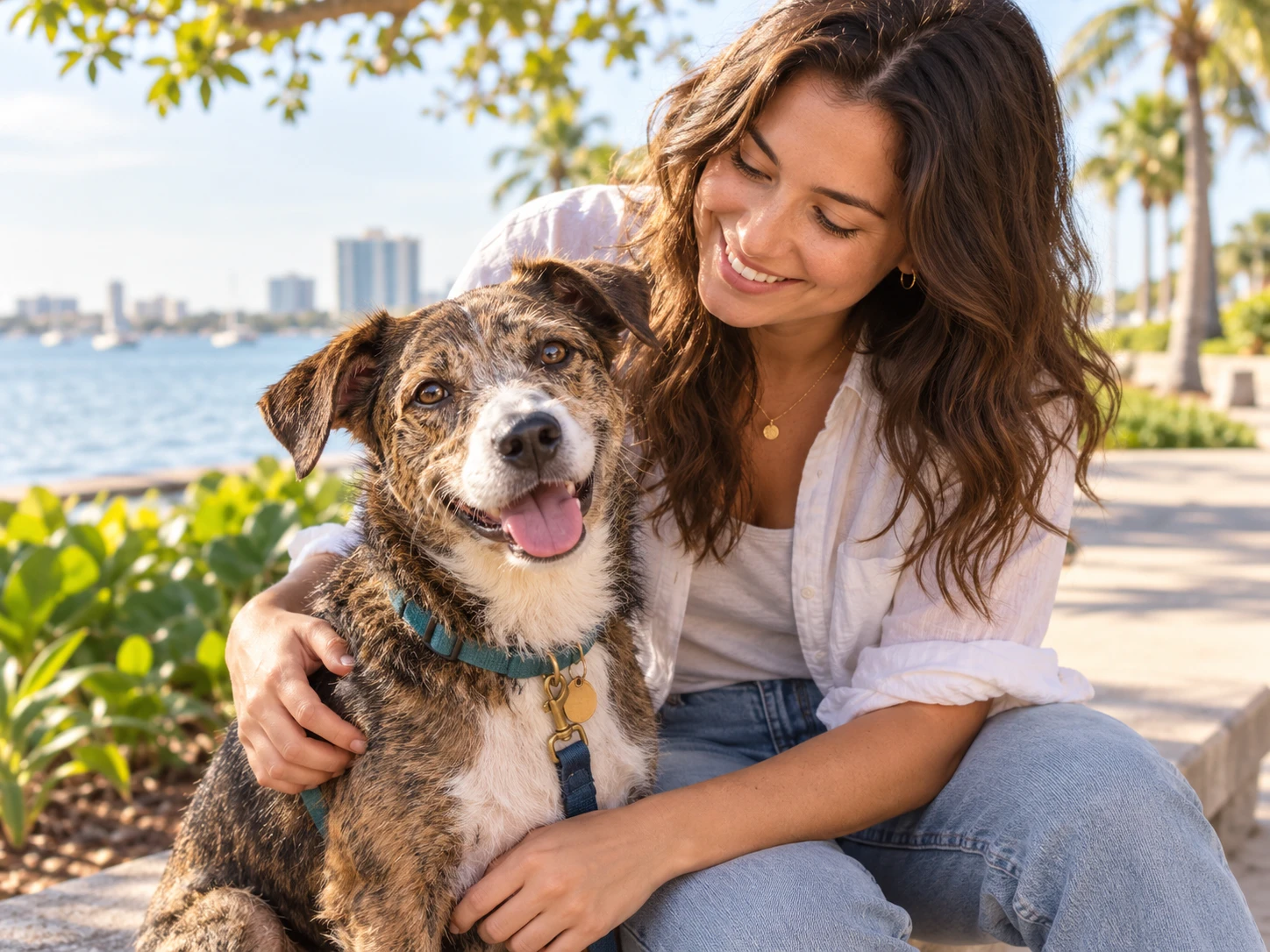
Here's a look at the worries that hold people back, what rescue pets need once they're home, and why the people you trust to help care for them matter more than you'd think.
The Hesitation Is Normal (and Usually Fixable)
Most concerns we hear from Sarasota pet parents fall into a few buckets:
"What if they have behavior problems?"
Some rescues arrive with quirks: nervousness, leash pulling, a fear of men in hats or of the vacuum. But a rescue's past isn't a life sentence. Most quirks respond well to patience, routine, and a little training. Good shelters and rescue groups will also tell you what they know about a pet's history, so ask plenty of questions.
"What if I don't know their background?"
True, you may not. But you also don't get a puppy's full history from a breeder's brochure. What you can do is meet the animal, spend time with them, and ask about foster notes. Fosters often know a pet's personality better than anyone.
"What if it doesn't work out?"
Fear of failing is often the biggest barrier. If you're not ready to commit, try fostering first. Local organizations like Satchel's Last Resort here in Sarasota welcome foster families, which is a low-pressure way to find out what life with a rescue is really like. And remember: the adjustment period is supposed to feel a little messy.
"I travel / work long hours."
This is a real consideration, and one of the best reasons to line up dependable pet care before you bring a pet home. More on that below.
Before Adoption Day: A Simple Prep Checklist
A little preparation takes a lot of pressure off the first week, for you and for your new pet. Before you head to the shelter, work through this list:
- The basics, ready to go: a collar or harness with an ID tag, a standard leash (not a retractable), food and water bowls, a bed, and a few chew toys or puzzle feeders. For cats, add a litter box, a scratching post, and a hiding spot like a covered bed or a cardboard box.
- The same food they're eating now: ask the shelter or foster what your pet has been fed. Starting with the same food and switching gradually over about a week helps avoid an upset stomach on top of everything else that's new.
- A pet-proofed home: check fence lines and gate latches, secure pool areas, and tuck away cords, trash cans, and anything chewable. In Sarasota yards, sago palms are toxic to pets, so fence them off or remove them.
- A microchip in your name: ask whether your pet is chipped and make sure the registration is updated with your phone number before you leave the shelter.
- A vet appointment on the calendar: book it before adoption day so it doesn't slip.
- Your care team, lined up: if you work long days or have a trip coming up, meet your walker or sitter now, not the night before you leave.
What Rescue Pets Need After Adoption
Bringing a rescue home isn't the finish line. It's the start of a settling-in period. Here's what helps most.
1. Time and patience
Many trainers and shelters talk about a rough "3-3-3" guide: about three days to decompress, three weeks to learn the routine, three months to feel truly at home. Every animal is different, but the takeaway is the same: don't judge your pet by the first week.
2. A predictable routine
Consistent feeding times, walks, and bedtime tell a rescue that this place is safe. Predictability is comforting to animals who've lived through chaos.
3. A quiet space of their own
A cozy corner, crate, or spare room lets them retreat and recharge. Let them come to you at their own pace, and skip the flood of visitors for the first few days. If you're crate training, Satchel's offers free training tips on their website, including crate training.
4. A vet visit early on
Schedule a checkup soon after adoption so you have a health baseline, vaccine records, and a vet who knows your pet.
5. Gentle socialization
Introduce new people, places, and pets slowly. Short, positive experiences beat overwhelming ones. Sarasota's dog-friendly spots are wonderful, but start with quiet ones.
6. Basic training and boundaries
Kindness and structure go hand in hand. Positive-reinforcement training builds confidence in a pet who may never have had clear expectations.
7. Reliable care when you're away
This one gets overlooked. A rescue who's just learning to trust you can feel real anxiety when you disappear. Pet care that's consistent (the same familiar faces, the same routine) helps them keep building security instead of starting over.
The Rescue Pet Adjustment Period: What the First Three Months Can Look Like
The 3-3-3 guide is easier to trust when you know what each stage tends to look like. Think of these as loose milestones, not deadlines. Some pets move through them faster, and some shy or under-socialized pets need longer.
The first three days: decompression
Your new pet may sleep a lot, hide, skip a meal or two, or seem shut down. Others are restless and can't settle. Both are normal responses to a huge change. Keep things quiet: short walks on the same route, a calm house, and no big outings, dog parks, or parties. Let them watch the household before they're asked to join it.
The first three weeks: learning the routine
As your pet realizes meals and walks come at the same times every day, their personality starts to show. That includes the good stuff (a first play bow, a first purr) and the tricky stuff, like testing boundaries or showing a fear you didn't see at the shelter. This is a good time to start short, upbeat training sessions and make sure everyone in the house follows the same rules.
The first three months: feeling at home
By now most rescues know the rhythm of your household and have started to bond. You'll likely see more confidence, more play, and a pet who greets you at the door like they've lived there forever. If fear, reactivity, or separation anxiety isn't improving by this point, that's a good time to bring in a positive-reinforcement trainer rather than wait it out.
One health note: some tummy trouble and a small appetite are common in the first day or two. If your pet still isn't eating after that, or you notice ongoing vomiting, diarrhea, or lethargy, call your vet instead of chalking it up to stress.
Rescue Cats Settle In Differently
Rescue cats go through their own adjustment period, and it often looks quieter than a dog's. Start your cat in a single room with food, water, a litter box, and a place to hide. Hiding under a bed for a few days is normal. Let your cat explore the rest of the house one room at a time once they're eating, using the litter box, and coming out on their own.
Cats are territorial, so the space they've just claimed matters a lot. That's why many cat parents choose in-home cat sitting in Sarasota over boarding when they travel: a newly adopted cat keeps their room, their routine, and their hiding spots instead of starting over somewhere new.
Why Hiring a Pet Care Company That Cares Is the Best Choice
Anyone can advertise pet sitting. But a rescue pet isn't just any client, and the difference between "someone who feeds the cat" and "someone who understands your pet" is huge.
A pet care company that truly cares will:
- Take time to get to know your pet before the first visit, including fears, triggers, and quirks
- Follow your routines so your pet's world stays predictable
- Communicate, with updates that tell you how your pet is actually doing, not just that a visit happened
- Notice the small things, like a skipped meal, a limp, or a change in behavior
- Be properly bonded and insured, so you're protected and can relax
- Show up consistently, because trust is built on repetition
For a rescue, who may already have been let down by people, consistency isn't a nicety. It's part of the healing.
Good pet care for rescue dogs also means respecting where they've been. That looks like approaching calmly and letting a nervous dog come to you, using the same walking route while they're still learning the neighborhood, and never forcing a greeting with another dog or person. A walker or sitter who follows your trainer's cues keeps your progress moving forward, even on the days you're not home.
(Not sure what to look for? See our Sarasota pet owner's travel prep guide for the full checklist.)
How Rescues Help Heal You, Too
Everyone says, "You saved that dog!" But ask almost any rescue parent, and they'll tell you the healing went both ways.
A rescue gives you a reason to get outside every morning. They give you someone to come home to, a warm weight on the couch after a hard day, and a steady reminder to slow down and be present. Their progress is deeply rewarding: the first time they wag, curl up beside you, or sleep through the night.
Rescues also teach patience and trust in ways few things can. Watching a once-timid animal blossom is a powerful reminder that people, and pets, can grow and heal.
Adoption isn't a one-way rescue. It's a partnership, and both of you come out better.
Ready to Meet Your Match? Adopting a Rescue Pet in Sarasota Starts Local
Sarasota is lucky to have organizations doing the hard work of caring for animals who need it most. Satchel's Last Resort, a no-kill shelter and sanctuary, focuses on rescuing, rehabilitating, and rehoming dogs and cats who might have nowhere else to go because of breed, behavior, or medical needs. You can browse their adoptable dogs and cats, learn about fostering, or find ways to volunteer or donate if you're not ready to adopt just yet.
One tip: Satchel's is a working shelter, so it's best to schedule an appointment before you visit. That way they can give you their full attention.
We're proud to count Satchel's among our local community partners.
Frequently Asked Questions
Bring Them Home with a Team Behind You
If you're still on the fence, that's okay. Ask questions, meet a few animals, consider fostering, and build your support system before the big day. Having a trusted local pet care team lined up makes the transition easier for you and your new best friend.
At Wiggle Your Tail Pet Care, we love helping Sarasota families care for their pets, rescues included. Whether you need dog walking, cat sitting, or overnight care while you settle into life together, we'd love to meet you both.
Have a new rescue (or one on the way)? Get in touch today and let's make sure your pet feels safe, loved, and cared for from day one.