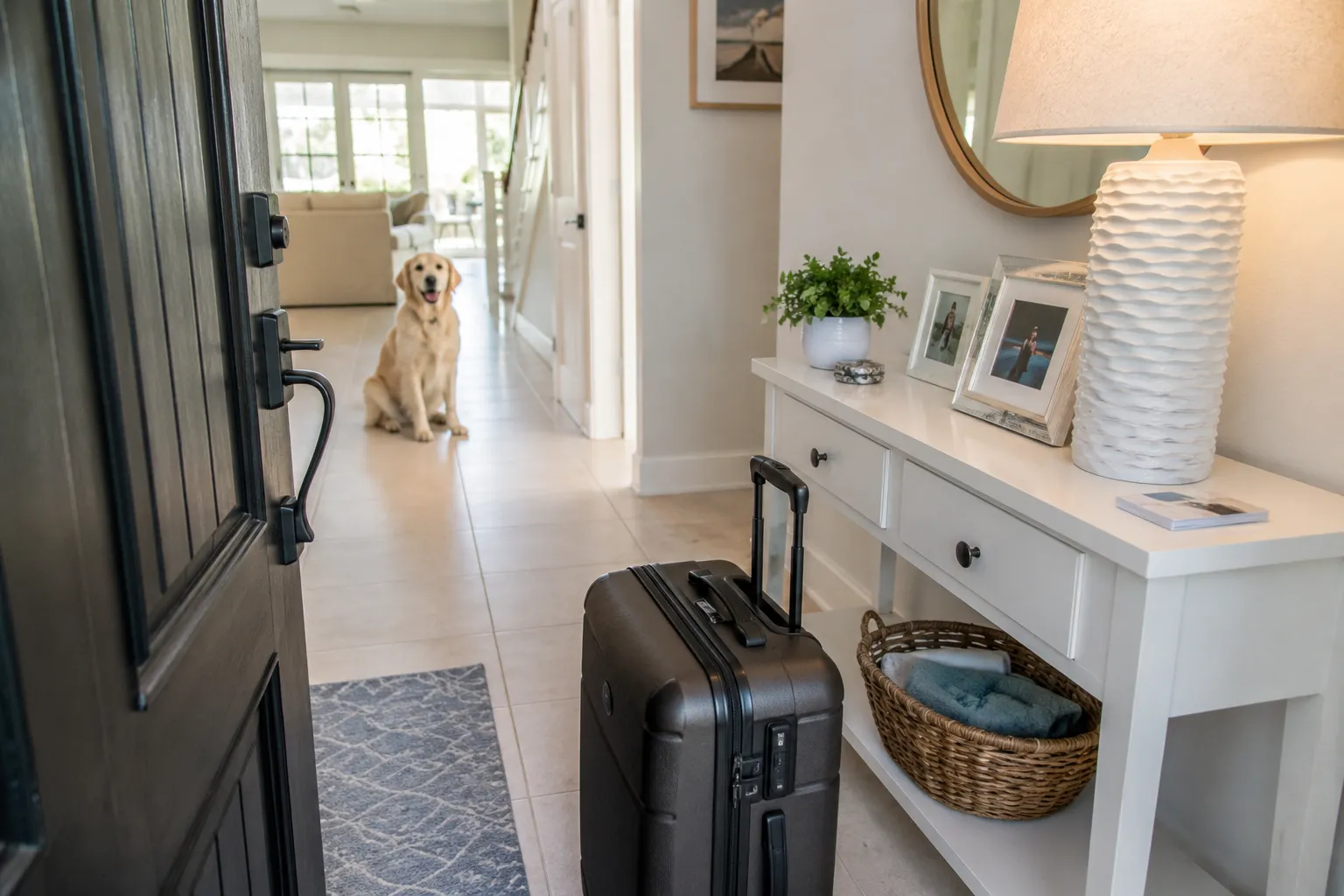
1. Preserving the Property: Humidity Control and Security
Before hitting the road, your primary goal is controlling indoor moisture and preventing common household disasters. Florida's summer storms bring intense humidity and frequent power surges that can devastate an unmanaged property.
The Climate Control Protocol
The air conditioning system should never be turned completely off. Setting the thermostat to 78°F balances necessary air circulation with energy efficiency, keeping mold spores from taking over your drywall and furniture. If your system features a humidistat, setting it to 55% offers an extra layer of defense against moisture.
Mitigating Water and Electrical Risks
Water damage poses an even greater risk than humidity. Turning off the main water valve to the house eliminates the danger of a pinhole pipe leak or a running toilet causing catastrophic structural damage while you are away for months.
Electrical protection requires a similar proactive approach. Unplugging major electronics like televisions, computers, and small kitchen appliances protects them from lightning strikes during intense afternoon thunderstorms.
2. Ensuring Pet Health: Travel Protocols and Local Security
When furbabies make the journey back north with you, their health documentation and travel comfort require advanced planning. Crossing state lines or flying legally requires proof of a current rabies vaccination.
Essential Departure Preparations
Scheduling an appointment with your Sarasota veterinarian at least two weeks before departure ensures you secure an Interstate Health Certificate, which is required by airlines and select state checkpoints.
Even if you are leaving Florida, parasite prevention must remain a priority. Fleas, ticks, and heartworm-carrying mosquitoes remain active across the country during the summer months, making a continuous supply of preventative medications essential.
Before departing, an audit of your pet's identification is crucial — double-check that collar tags and microchip registries are completely updated with your current mobile phone number and summer destination address.
3. If Your Pets Stay Behind: What to Leave in Place
Some pets are better off staying in Sarasota — seniors, nervous travelers, or pets you'll only be away from for a few weeks. If yours is staying, the work happens before you leave:
- Medical release. Leave a signed emergency medical release with your veterinarian and a local emergency animal hospital, authorizing your caregiver to approve treatment up to a set dollar amount if you can't be reached.
- Supplies for the full season. Stock food, litter, preventatives and prescriptions — plus a 14-day hurricane reserve of food, water and medication in a waterproof bin.
- Written routine. Feeding amounts, walk times, medication schedule, hiding spots and behavior quirks, kept in a binder on the kitchen counter.
- Notify your HOA and neighbors. Share who will be visiting, their vehicle and their schedule so no one calls security on your caregiver.
- Two sets of keys and codes. One for your caregiver and one with a trusted backup, plus gate codes, fobs and alarm instructions.
If you'd like a professional to cover both your pets and your empty house, see our Sarasota snowbird services or in-home pet sitting; cat owners can read about our in-home cat care.
4. The Complete Pre-Departure Checklist
Use this room-by-room checklist in the final 48 hours before you leave. Moving methodically through each space ensures nothing slips through the cracks during the rush of departure day.
Exterior & Utilities
- Set thermostat to 78°F and humidistat to 55%
- Shut off the main water supply valve
- Turn off the gas supply if your home has gas appliances
- Trim any tree branches hanging close to the roofline before hurricane season
- Secure or store outdoor furniture, planters, and decorations that could become projectiles
- Verify that gutters are clear before the rainy season begins
- Notify your home security provider and update the emergency contact list
Interior
- Unplug all TVs, computers, routers, and small kitchen appliances
- Empty and defrost the refrigerator; prop both doors open
- Remove all perishable food and sealed cardboard packaging
- Pour a small amount of cooking oil down each drain to slow moisture evaporation and prevent sewer gas from entering
- Flush all toilets and add a small amount of bleach to each bowl to inhibit mold growth
- Close all interior blinds or shades to reduce solar heat gain
- Store important documents and valuables in a fireproof lockbox or safe deposit box
5. Traveling North With Your Pet: Car vs. Plane
The method you choose to bring your pet home for the summer has meaningful implications for their comfort and safety. Understanding the differences between driving and flying helps you make the right call for your specific animal.
Road Tripping With Your Pet
Driving is often the lower-stress option for dogs and cats who are comfortable in a vehicle. Plan for a stop every two to three hours for water, bathroom breaks, and a chance to stretch. Never leave a pet alone in a parked car in Florida's heat, even for a few minutes — interior temperatures can reach deadly levels within ten minutes.
Bring a portable water bowl, a familiar blanket or toy, and enough of your pet's regular food to cover the entire journey plus two extra days. Abrupt food changes during travel can cause digestive upset, so resist the urge to pick up a different brand at a roadside pet store.
Flying With Your Pet
If you are flying, book your pet's reservation at the same time you book your own — most airlines cap the number of pets per flight and spots fill quickly. Cats and small dogs that fit in an approved soft-sided carrier can typically travel in the cabin under the seat. Larger dogs must travel as checked baggage or cargo, which introduces temperature and handling risks that are worth discussing with your vet.
Regardless of travel method, avoid sedating your pet without veterinary guidance. Sedation can interfere with a pet's ability to balance and regulate their own body temperature, which creates serious risks in cargo environments.
6. Returning Home: The Fall Reopening Checklist
The work of being a snowbird does not end when you leave — your return to Sarasota in the fall requires its own set of preparations to get the home and your pets back on their regular Sarasota routine safely.
Before You Walk In
Before re-entering a home that has been closed all summer, give it time to air out. Open windows and exterior doors for at least 30 minutes before spending extended time indoors. Even a well-managed property can have accumulated stale air, and any undetected moisture issues will be immediately apparent by smell.
- Walk the exterior perimeter and look for storm damage to the roof, screens, and foundation
- Check under sinks and around the water heater before restoring water pressure
- Inspect the AC unit and change the air filter before running the system continuously
- Run each faucet and flush each toilet several times to clear the lines
- Test smoke detectors and carbon monoxide detectors and replace batteries
Reintroducing Your Pets
Pets that traveled north for the summer may need a brief readjustment period when they return to Sarasota. The smells, humidity, and heat can feel foreign again after several months away. Give them a day or two to re-acclimate before resuming normal exercise routines, and schedule a wellness check with your Sarasota vet to confirm their parasite prevention is current and they are in good condition for Florida's fall humidity.
For pets that stayed behind all summer with a sitter, the reunion is typically seamless — they have been in their home environment the entire time and will simply be excited to have their family back. Your in-home sitter can provide a full handoff report covering feeding patterns, any behavioral observations, and notes from any vet visits that occurred while you were away.