How Long Can Puppies Stay Home Alone by Age?
The table below starts from the widely used rule of thumb that a puppy can hold its bladder for about one hour per month of age, the guideline given by VCA Animal Hospitals and Humane World for Animals (formerly the Humane Society of the United States). The American Kennel Club offers a slightly more generous version, age in months plus one, which is best treated as an upper limit rather than a goal. The "time alone" column is deliberately more conservative, because a puppy's comfort with being alone usually develops more slowly than its bladder.
| Puppy age | Rough bladder limit | Suggested potty breaks | Starting point for time alone |
|---|---|---|---|
| 8–10 weeks | About 2 hours | Every 1–2 hours, plus after naps, meals and play | A few minutes at first, building toward about 1 hour |
| 10–12 weeks | 2–3 hours | About every 2 hours | Up to about 1–2 hours |
| 3–4 months | 3–4 hours | Every 2–3 hours | Up to about 2–3 hours |
| 4–6 months | 4–6 hours | Every 3–4 hours | Up to about 3–4 hours |
| 6–12 months | About 6 hours, improving with age | Every 4–6 hours, adjusted to your dog | Gradually build toward 4–6 hours |
Treat these numbers as ceilings, not targets. Small breeds, puppies who just had a big drink or a play session, and puppies with a health problem such as a urinary tract infection may need to go much sooner. If your puppy suddenly needs to pee far more often than usual, check with your veterinarian.
Bladder capacity is not the same as readiness to be alone
A puppy who can physically hold it for three hours isn't automatically ready to spend three hours by themselves. Being alone is a skill puppies learn gradually. Start with very short absences, such as stepping outside for a few minutes, and lengthen them while your puppy stays relaxed. Constant crying, frantic chewing at the crate or door, heavy drooling or accidents from a puppy who normally holds it are all signs the stretch was too long. VCA suggests watching the first few separations on a pet camera so you can see how your puppy really copes.
Why Puppies Need More Frequent Potty Breaks
Bladder control is still developing over a puppy's first few months, so even a quick learner can't "just hold it" the way an adult dog can. On top of that, a puppy's day is full of potty triggers. Humane World for Animals recommends taking young puppies out at least every two hours, as well as at these predictable moments:
- Waking up. First thing in the morning and right after every nap.
- Eating. Many puppies need to go shortly after a meal. Feeding on a consistent schedule makes potty timing much easier to predict.
- Drinking. A big drink usually means a trip outside soon after. Don't limit daytime water to stretch the time between breaks; puppies need steady access to fresh water, especially in Florida's heat.
- Play and exercise. Activity gets things moving. Take your puppy out during and after play sessions.
- Excitement. Visitors, new places and other dogs can all bring on an urgent need to go.
Frequent breaks also matter for house-training itself. Every successful trip outside, followed by praise or a treat, strengthens the habit, and every accident indoors is practice in the wrong place. For more on building good habits early, see our guide to dog training from puppyhood to adulthood.
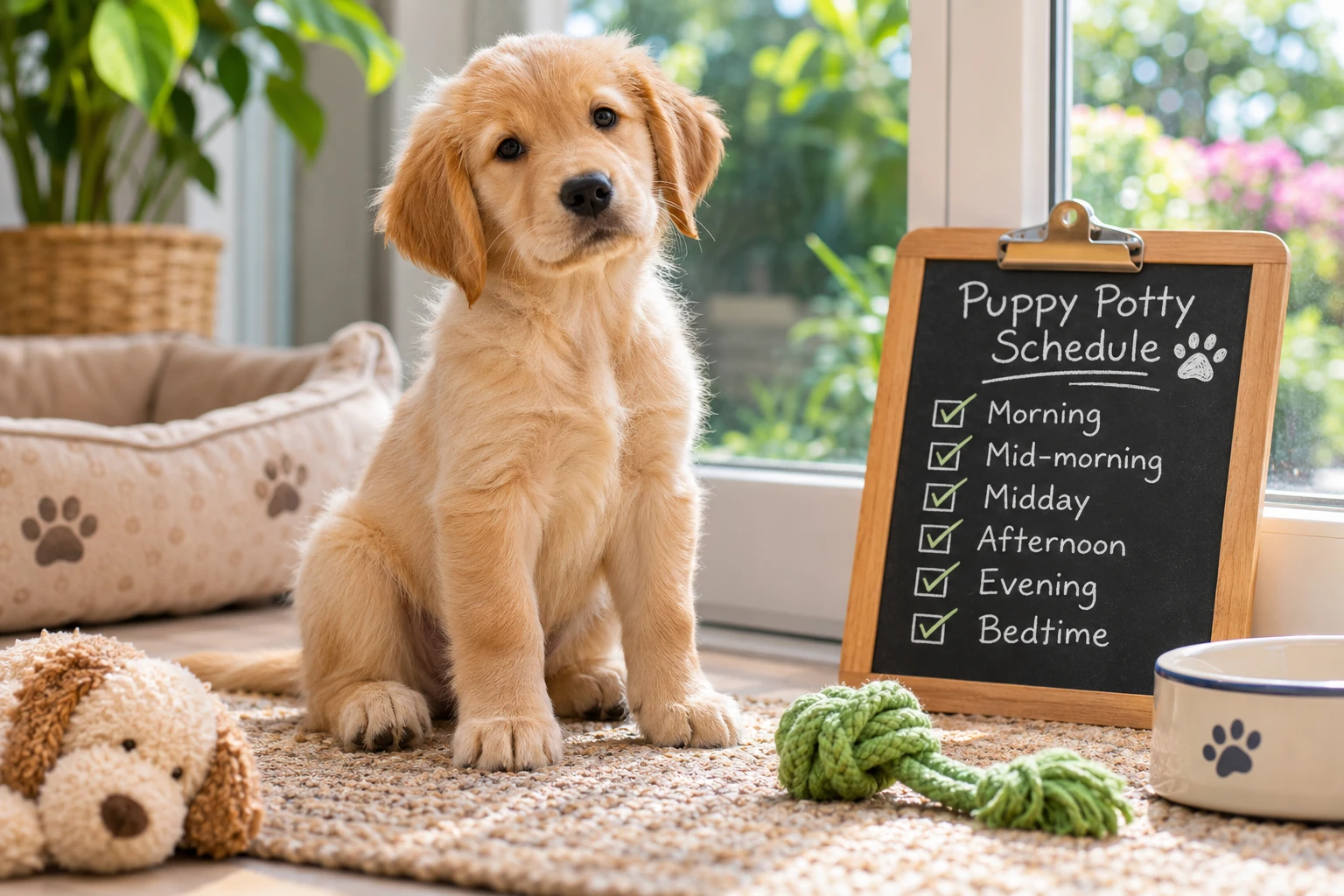
Sample Puppy Potty Break Schedule for Working Owners
Here is a realistic weekday routine for a 3-month-old puppy (around 12–14 weeks) whose owner leaves for work at 8:00 a.m. and gets home at 5:30 p.m. A 4- to 6-month-old may be able to drop one of the daytime breaks. An 8- to 10-week-old puppy needs breaks every one to two hours, which usually means someone home for most of the day.
Those three daytime breaks don't all have to come from the same person. A family member, a trusted neighbor, a lunch-hour trip home or professional visits can share the load, as long as the timing stays consistent.
What Happens When a Puppy Is Left Alone Too Long?
One long day won't ruin a puppy, but regularly asking for more than they can manage tends to show up in a few ways:
- House-training setbacks. A puppy who has to go in the crate or on the floor is learning that indoors is an acceptable place to go. Repeated crate accidents can also weaken a puppy's natural reluctance to soil their sleeping area, which makes house-training harder.
- Stress. Some puppies nap through the day; others cry, bark, chew or try to escape. A little fussing is normal, but distress that continues for long periods is worth addressing early with your veterinarian or a qualified trainer.
- Boredom. Puppies are built to explore and chew. Long, empty stretches often end with chewed baseboards, shoes or crate bedding.
- Unmet exercise and social needs. The first months are when puppies learn about people, sounds and everyday life. A puppy who spends most of the day alone has fewer chances to practice, and often has pent-up energy by evening.
What If You Work Full-Time and Have a Puppy?
Plenty of people with full-time jobs raise happy, well-trained puppies. It just takes a plan for the hours you're away:
- Front-load your time off. If you can, take a few days off or work from home for the first week or two after your puppy comes home, so you can start house-training and short practice absences.
- Split the day across your household. Staggered start times, a partner's lunch break or a remote-work day can cover one or more breaks.
- Lean on trusted family, friends or neighbors. Give them your puppy's exact routine: potty spot, cue words, feeding amounts and crate rules. Consistency matters more than who does it.
- Set up a puppy-safe space. Use the crate for shorter stretches. For longer days, an exercise pen or puppy-proofed room with a bed, water and safe chew toys gives your puppy more room.
- Book planned daytime visits. Puppy drop-in visits from a professional pet sitter give your puppy a potty break, fresh water, a meal if needed and some play at the same times each day, even when your workday runs long.
When Should You Arrange a Midday Puppy Visit?
A scheduled visit is worth considering when:
- Your puppy is under about six months old and you're regularly away for more than three to four hours.
- You're finding accidents in the crate or just inside the door when you get home.
- Your commute turns an eight-hour workday into ten hours away.
- A pet camera shows your puppy crying or pacing for long stretches.
- Your puppy is bursting with energy at night because the day was spent mostly in a crate.
- Your vet recommends three meals a day and no one is home at lunchtime.
- Your schedule changes week to week, with shift work, travel days or late meetings.
For Sarasota puppies, the heat also shapes the routine. A midday visit is a good time to refresh water and make sure your puppy is comfortable indoors, while longer outdoor play is usually best saved for cooler mornings and evenings during our long summers. If you'd rather not juggle it all yourself, scheduled daytime pet care can fill the gaps in your week.
Frequently Asked Questions
Need Someone to Check on Your Puppy During the Day?
A steady routine is one of the most helpful things you can give a young puppy, and it's often the hardest part to keep up once you're back at work. Wiggle Your Tail offers scheduled drop-in visits for pet owners in Sarasota and nearby communities. Choose 30-, 45- or 60-minute visits for potty breaks, meals, fresh water, playtime and cuddles, with photos and updates after each visit.
Every new client starts with a free meet & greet, so your sitter can learn your puppy's schedule, crate setup and house-training routine before the first visit.
Explore our puppy-friendly drop-in visits in Sarasota →
- VCA Animal Hospitals: How to Potty Train Your Puppy
- Humane World for Animals: How to Housetrain Your Dog or Puppy
- Humane World for Animals: Crate Training 101
- American Kennel Club: Puppy Potty Training Timeline
- VCA Animal Hospitals: Crate Training Your Dog
This article is general guidance, not veterinary advice. Your veterinarian can tell you what is right for your puppy.